ServicesWater Softeners
Water Softeners in Denton
A softener removes the calcium and magnesium that leave white crust on faucets and scale inside your water heater. We check your hardness first, size the system to your household, and tell you plainly whether a softener is worth it for your home.
How a softener works, and when you need one
Hard water is full of dissolved minerals. Heat it or let it dry, and those minerals drop out as scale on shower doors, in kettles and on your water heater's elements. A softener sends the water through a tank of tiny resin beads loaded with sodium or potassium. The beads grab the calcium and magnesium and swap in sodium or potassium, which leaves nothing behind to build scale.
A softener earns its place when hardness is causing real wear and extra cleaning. It is not a filter, and it barely touches chlorine taste or smell. If that is what bothers you, whole-home filtration is usually the better first step. Before you spend anything, we tell you honestly which of the two fits your home.
Hardness varies across the Denton area, so we measure yours before we size a system on paper.
What your softener installation includes
- Hardness check and sizing
- We measure your hardness and ask how many people live in your home. Those two numbers set the grain capacity, so the system regenerates when it needs to rather than wasting salt.
- Resin tank and brine tank
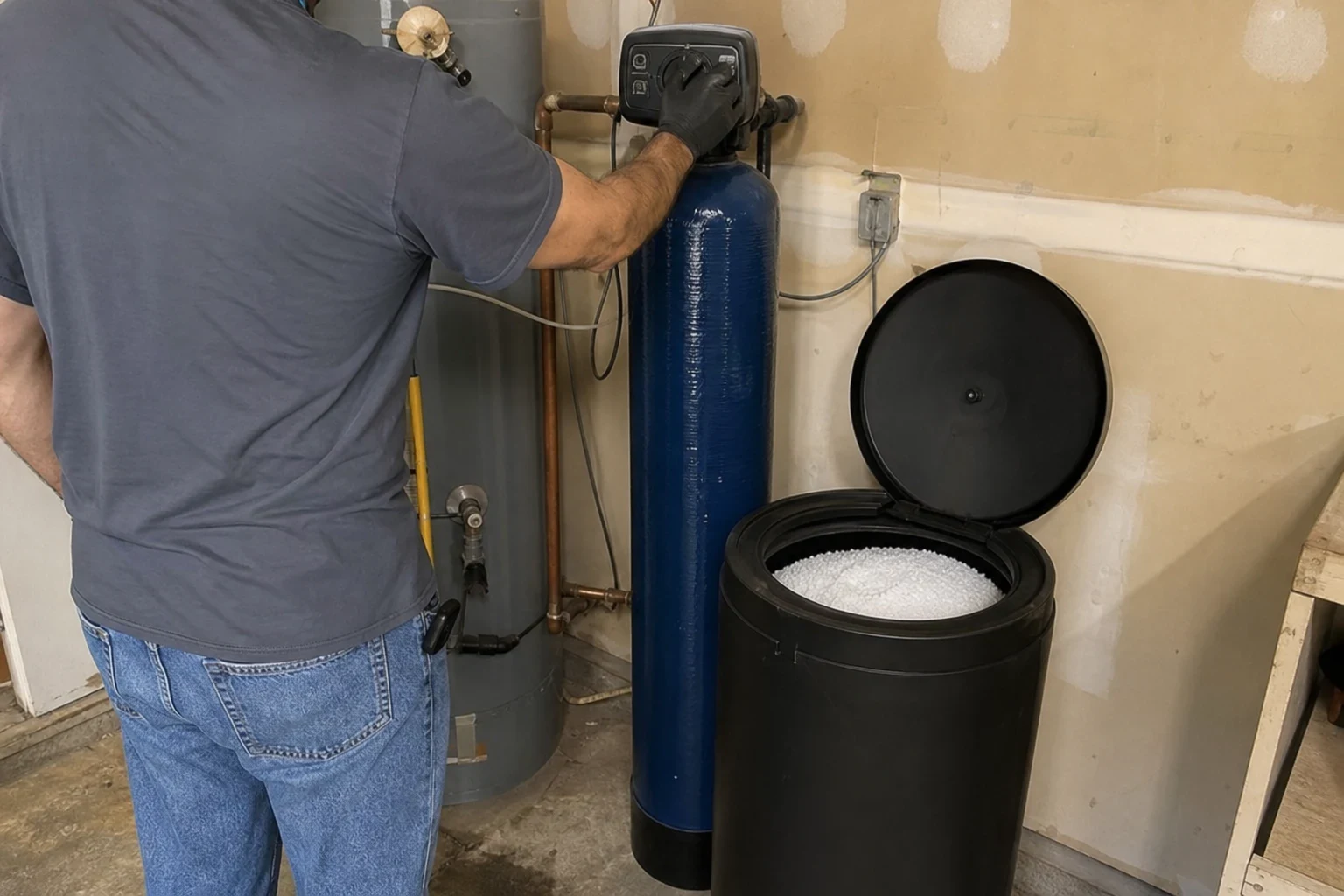
- A mineral tank holds the resin, and a separate brine tank holds the salt. We place both where you can reach the lid for refills without moving storage around.
- Bypass valve
- Every install gets a bypass so you can keep water flowing to your home during service or if you ever need to shut the softener off.
- Drain line with an air gap
- Regeneration flushes brine to a drain. We run that line with a proper air gap so wastewater cannot siphon back toward your supply.
- Programming and a walkthrough
- We set the control valve to your hardness and household use, then show you how to add salt, read the display and use the bypass.
Clues that your water is hard enough to soften
Crusty white fixtures
A chalky ring around faucets and showerheads that comes back a few days after you scrub it off.
Cloudy dishes
Glasses and plates come out of the dishwasher hazy, even when you use rinse aid.
Poor lather
You go through more shampoo and dish soap than seems right, and your skin feels coated after showering.
A popping water heater
Scale settling on the bottom of a tank water heater traps pockets of water that pop and crackle when the burner runs. A heater like that burns more energy for the same hot water.
Rough, faded laundry
Scratchy towels and clothes that fade too soon can mean minerals are trapping detergent in the fibers.
What sets the cost of a softener
No two homes get the same softener price. Most of the difference comes from two places: how much capacity your hardness and household need, and how much work it takes to connect to your main water line. Qualifying homes get standard professional installation included, and a phone call is enough to find out if yours is one of them.
Grain capacity
Harder water and a bigger household call for a larger resin tank. Too big wastes money, and too small means the system regenerates too often.
Metered or timer valve
A metered valve tracks how many gallons you use and regenerates only when the resin is nearly exhausted, so you use less salt over time. A timer valve regenerates on a set schedule and is cheaper up front.
Access to the main line
If the garage already has a softener loop, the job stays simple. Running new pipe to the main line takes more hours and more material.
Pairing with other treatment
Some households add carbon for taste or reverse osmosis at the kitchen sink. Doing both in one visit usually costs less than booking them separately.
How the work goes
- 1
Start with a phone call
Describe the crust, spots or film you have noticed and how many people share your home. We will say plainly whether minerals are the likely cause.
- 2
Measure, then quote
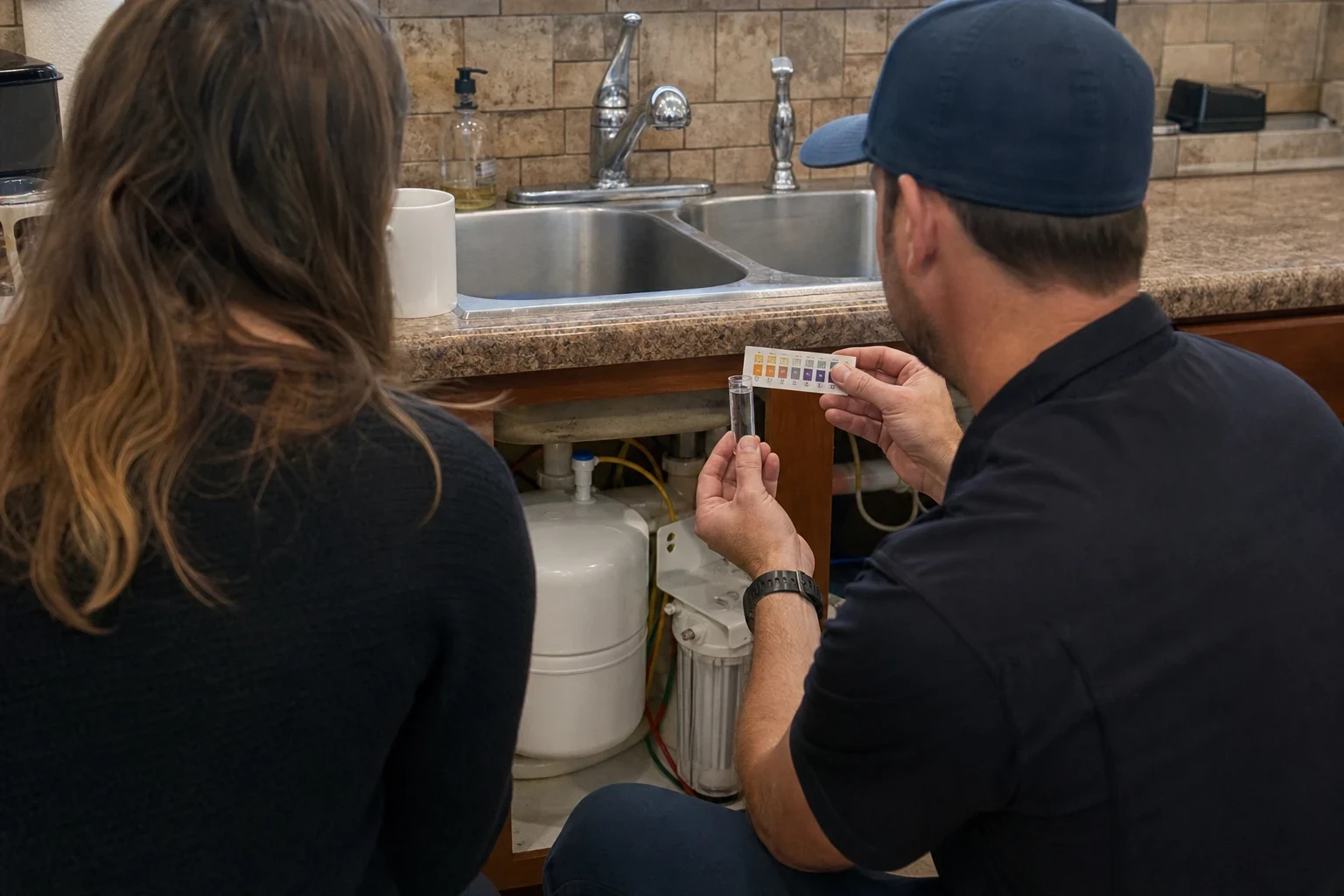
We check your hardness and walk you through what the reading means. Your quote then lists the softener, the valve and the installation work line by line.
- 3
Installation day
Once the supply is closed, we open the main line, set the bypass in place and route the drain for regeneration. Floors and the work area stay covered throughout, and packaging and pipe offcuts leave with us.
- 4
Setup and handover
We load salt, run the first regeneration and confirm the softened water downstream. Then we walk you through refills and the bypass so nothing about the system is a mystery.
Softener questions we hear most
Does my home actually need a softener?
Only if your hardness is high enough to cause scale and extra cleaning. We measure it first and give you the number. If it is low, we will say so and point you toward the option that solves your real complaint.
Will softened water taste salty?
Most people taste no salt at all. The sodium a softener adds rises with the starting hardness, so moderately hard water picks up only a little. Potassium chloride can stand in for salt, and reverse osmosis at the kitchen sink strips most of the sodium from your drinking and cooking water.
Does a softener remove chlorine?
No. A softener targets calcium and magnesium. For chlorine taste and odor, whole-home filtration with carbon is the tool, and the two can work together on the same line.
How much upkeep does it need?
Your main job is keeping the brine tank stocked with salt. How often you refill depends on your hardness and how much water your household runs, so a quick look under the lid each month is a good habit. If the salt has fused into a hard shelf near the top, break it up so brine can form again.
Where does the softener go?
Usually near where the main line enters, often the garage. It needs a level spot, a nearby drain for regeneration and an outlet for the control valve.
See whether a softener makes sense for you
Describe what you notice at the sink and in the shower. We measure your hardness, size the softener to what you need and give you a quote you can follow.