ServicesReverse Osmosis
Reverse Osmosis Systems in Denton
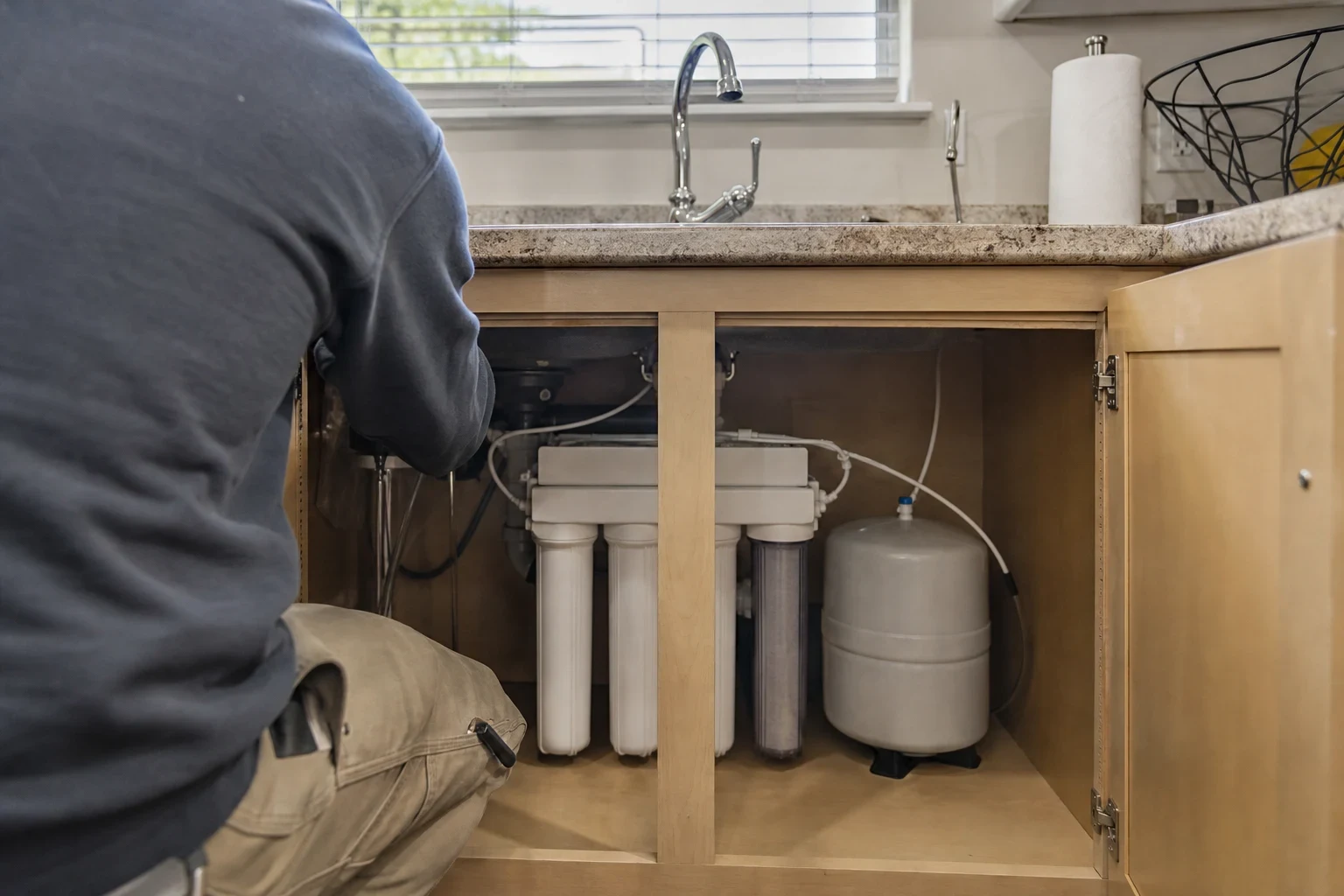
A reverse osmosis system sits quietly under your kitchen sink and sends finely filtered water to its own faucet. We explain what it removes, what it costs to own and how it will fit your cabinet before anything is installed.
How Reverse Osmosis Works, and Who It Suits
In reverse osmosis, water is forced through a membrane whose pores are far finer than any carbon filter. Most dissolved solids, trace lead from older pipes and leftover disinfectant taste are held back and flushed to the drain. The water that comes out tastes clean and neutral.
It treats one sink only. Water for drinking, coffee and cooking is filtered, while the shower, washer and toilets still use regular tap water. To change the water at every faucet in the house, start with whole-home filtration; the two systems can run together.
We tell you straight which one fixes what bothers you. It may be reverse osmosis on its own, a simpler filter, or now and then no system at all.
What Your Installation Includes
Staged filtration
A sediment cartridge traps sand and rust flakes first. A carbon block follows and strips chlorine before it can harm the membrane, the membrane separates out dissolved solids, and a last carbon cartridge rounds off the taste just ahead of the faucet. Each housing is labeled so later changes are simple.
A dedicated faucet
The system gets its own slim faucet beside your main tap. We can use an existing sprayer or soap dispenser hole, or drill a clean opening in stone, quartz or laminate with the right bit for the material.
Tank or tankless setup
A tank system stores filtered water and works without power. A tankless unit saves cabinet space and makes water on demand, but needs an outlet under the sink.
Proper drain and feed connections
We fit a drain saddle so rinse water leaves cleanly, add a feed valve on your cold line and check every fitting for weeps before we close the cabinet.
Optional add-ons
A remineralization stage returns a little calcium and magnesium for a rounder taste. A line to your refrigerator gives you filtered ice and chilled water too.
Startup and walkthrough
We flush the system, discard the first tanks of water and show you how to shut it off and change filters. Standard professional installation is included for qualifying homes.
Signs Reverse Osmosis Is Worth a Look
You buy bottled water every week
If cases of bottled water are a standing item on your shopping list, an under-sink system usually ends that habit and frees up pantry space.
Tap water tastes of chlorine
Disinfectant keeps city water safe, but some people dislike the taste. The carbon stages in a reverse osmosis system take it out of your drinking water.
Your plumbing is older
Older pipes and solder can add trace metals between the street and your faucet. A membrane is one of the most effective household options for drinking water.
Coffee and tea taste flat or bitter
Dissolved minerals and chlorine change how coffee extracts. Many people notice the difference in the first cup.
Cloudy ice and spotted glassware
White film on glasses and cloudy cubes usually point to dissolved solids. Filtered water at the faucet and the ice maker helps with both.
How the Work Goes
- 1
Start with a phone call
Describe your sink and cabinet, and say what you dislike about the water now, whether that is taste, odor or concern about old pipes. We talk through the options and give you a quote over the phone. If you would rather see numbers first, ask about a water test and a written water report.
- 2
A look under the sink
We check cabinet space, the cold shutoff, the drain line, any garbage disposal and whether there is an outlet. This settles tank versus tankless and where the faucet will sit.
- 3
Installation day
We lay a mat inside the cabinet and protect the countertop before drilling. Most kitchen installs take a few hours, and your main faucet is back in service the same visit.
- 4
Flush, check and tidy
We flush the system, check pressure and look for leaks with the cabinet dry. Packaging and offcuts leave with us, and we walk you through filter changes before we go.
What Sets the Cost
A reverse osmosis price depends on the system you pick and the way your kitchen is put together. Every part of the quote gets its own line, so you can see what you are paying for. Replacement filters are a cost that continues, and we cover them from the start.
- Tank or tankless
- Tankless systems take less room but cost more and need power. No outlet under the sink means one has to be added.
- Countertop and faucet hole
- Using a hole that is already there is easiest. Cutting through granite or quartz takes longer and more care than laminate.
- Add-ons
- A remineralization stage, a line to the refrigerator or a booster pump for weak water pressure each raise the price.
- Cabinet layout
- A packed cabinet holding a disposal, a dishwasher hookup and cleaning products may call for extra fittings or mounting the unit elsewhere.
- Ongoing filters
- Expect to replace prefilters roughly once or twice a year and the membrane after several years. Your household's water use and what is dissolved in your water decide how fast they wear.
Reverse Osmosis Questions
Something not covered here? (940) 289-6071
Does reverse osmosis waste water?
Yes, some. The membrane rinses itself with a stream of water that goes to the drain. Newer systems send much less to the drain than older designs, and we can show you the ratio for any model we quote.
Will it take out the minerals and make the water taste flat?
It removes most dissolved minerals, which some people find tastes very clean and others find flat. A remineralization stage adds a small amount back. You can choose either.
Will it fit under my sink?
Most kitchen cabinets have room for a tank system, though it takes up a good share of the space. If storage matters, a tankless unit is noticeably more compact. We confirm fit before install day.
Can it supply my refrigerator and ice maker?
Usually, yes. We run a line from the system to the fridge connection. The distance and the route through cabinets affect the work involved.
Do I need a water softener too?
Usually not. Very hard water wears a membrane out sooner, so where hardness runs high, a softener placed upstream can earn its cost. Where it is moderate, the extra equipment rarely pays off, and we will say so.
How is this different from whole-home filtration?
Whole-home filtration treats every tap and is mainly about chlorine taste and odor. Reverse osmosis filters much more finely but only at one faucet. Some homes need one, some benefit from both.
Better Water at Your Kitchen Sink
Describe your sink and the water you would like from it. We will lay out the setup that fits and the full cost, line by line, so nothing is left to guess.