What Is the Best Whole Home Filtration System for a Denton Home?
There is no single winning brand, but there is a clear way to pick the right system for your home.
What is the best whole home filtration system?
The best whole home filtration system is the one built around your water and your household's flow rate. For most city-water homes, that means a sediment prefilter feeding a large carbon or catalytic carbon tank, sized so every faucet keeps full pressure. Start with a water test, then choose the media. (940) 289-6071
What actually makes one system better than another
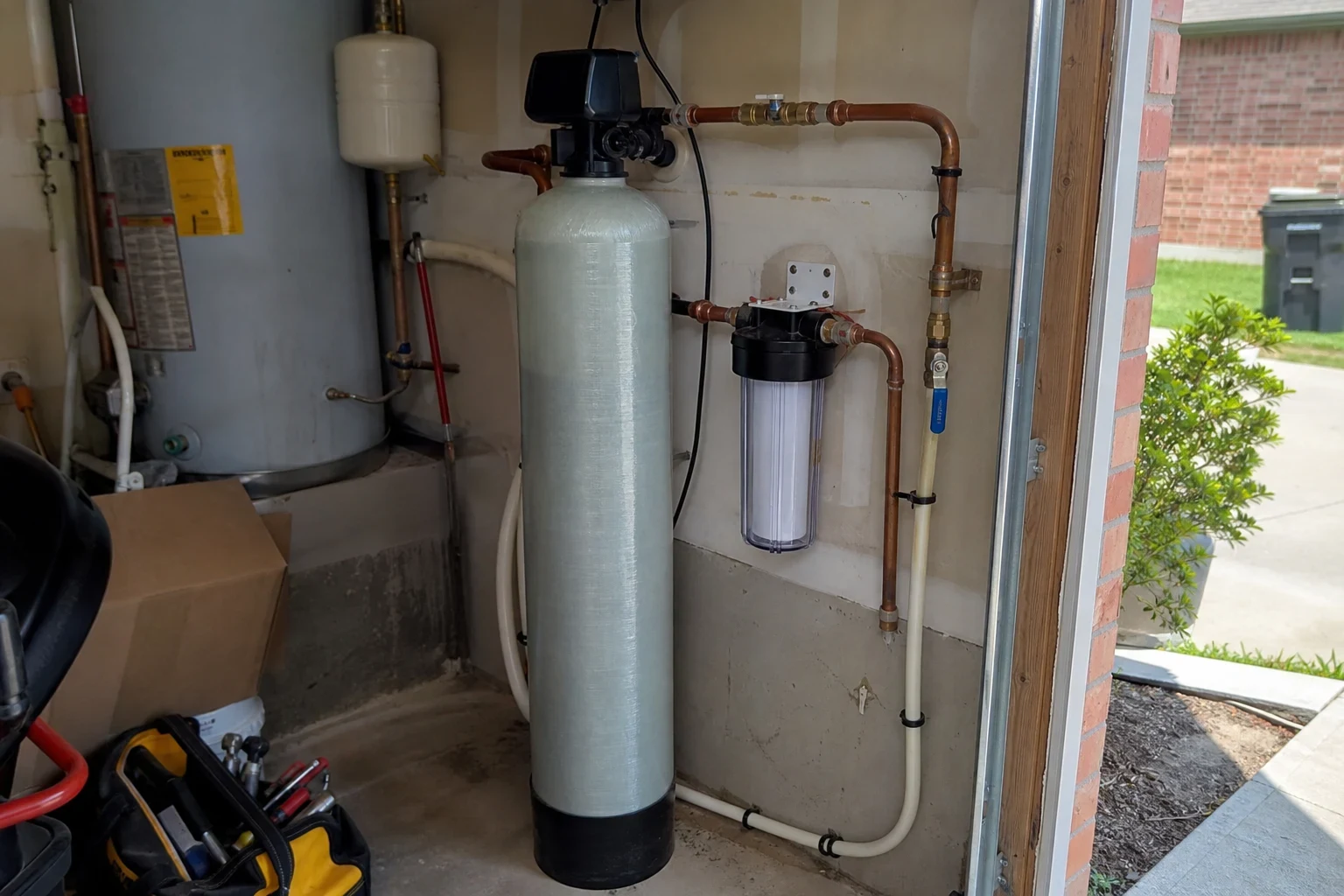
Two systems can look alike in a photo and perform very differently. The difference sits inside the tank and in how the unit is sized. A filter that is too small for your home lets water rush past the media, so chlorine and odor get through. It can also drop pressure when two showers and the washer run at once.
We judge a system on a few plain points before we recommend it. None of them is a logo.
- The filter media, and whether it suits what is actually in your water
- Flow rate in gallons per minute, matched to your bathrooms and fixtures
- Media volume, which sets how long the system works before replacement
- Build materials: a fiberglass-reinforced tank, a quality control valve and a bypass so you are never without water during service
Which filter media fits city water
Most municipal water is safe by regulation. What people notice at home is taste and smell, usually from the disinfectant the utility adds. Standard activated carbon handles chlorine well. If your utility uses chloramine, you need catalytic carbon, which is made to break that compound down and is the more reliable choice for it.
Your city's annual water quality report says which disinfectant is used. If you are not sure, we can go through it with you when we test your water and explain what the numbers mean for your home.
A sediment prefilter is worth having on almost every setup. It catches sand, rust flakes and grit before they reach the carbon, which keeps the main media working longer and protects valves and appliances downstream.
- Activated carbon: chlorine taste and odor
- Catalytic carbon: chloramine, plus chlorine
- Sediment prefilter: grit and particles that shorten media life
- KDF blends: sometimes added to extend carbon life and reduce some metals
What moves the cost of a whole-home system
We do not quote a figure until we know your home, because a handful of factors swing the total in either direction. A straight answer about each one is part of every quote we give.
The biggest drivers are system size and where the main water line comes in. Many Denton-area homes sit on slab foundations with the line entering at the garage or an outside wall, which is usually straightforward. A line buried in a finished wall or an awkward closet takes more plumbing work.
- Home size and number of bathrooms, which set the flow rate you need
- Tank-style media versus a cartridge housing
- Access to the main line and the plumbing needed to reach it
- Whether you add a softener, drinking water system or UV unit at the same time
When whole-home filtration is not the whole answer
A carbon system improves the water at every tap, but it does not do everything. It will not remove hardness minerals, so if your test shows scale-forming hardness, a water softener is the tool for that. We only suggest one when the test supports it.
For drinking and cooking water, many families pair the whole-home filter with an under-sink reverse osmosis unit. Reverse osmosis reduces dissolved solids, lead from older fixtures and other trace contaminants that carbon alone does not fully address. UV water treatment is a separate step for households that want added protection against bacteria and other microorganisms.
More questions about whole-home filters
- How long does the filter media last?
- It depends on your water and how much you use. A properly sized tank of carbon often runs for years, while a sediment prefilter cartridge needs changing more often. We tell you the expected interval for your setup before installation.
- Will a whole-home filter lower my water pressure?
- A correctly sized system should not cause a pressure drop you notice. Pressure problems usually come from an undersized unit or a clogged prefilter, which is why sizing is the first thing we check.
- Does a carbon whole-home filter remove fluoride?
- No, carbon does not meaningfully reduce fluoride. If that matters to you, a reverse osmosis system at the kitchen sink is the better fit.
- Is installation included?
- Standard professional installation is included for qualifying homes. We confirm whether your home qualifies when we prepare your quote.
Find out which system fits your water
One phone call gets you a quote built around your home, along with a water test, so the recommendation starts from your results rather than a sales sheet. We will explain the media, the sizing and what drives the price.